
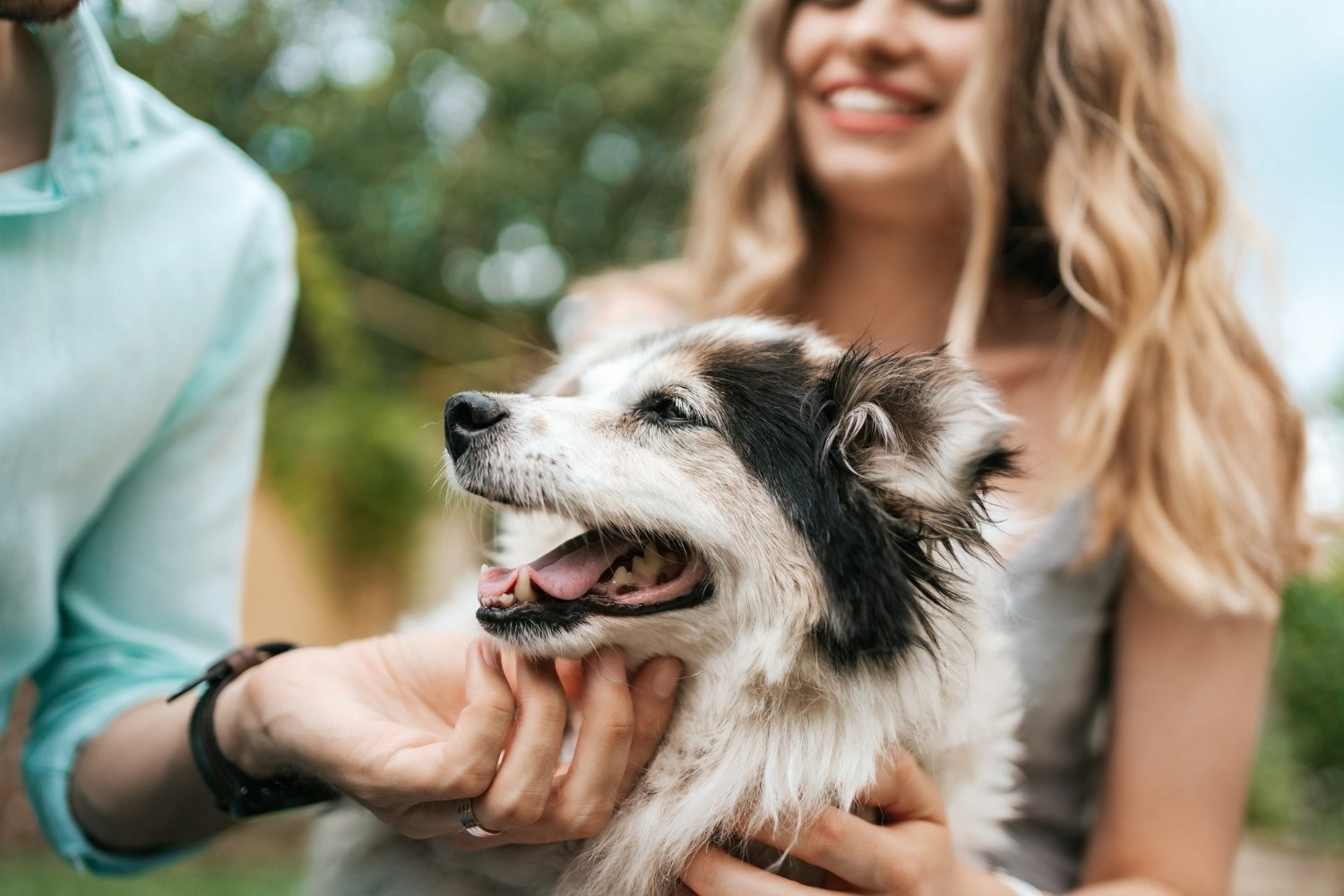
Our dogs are constantly communicating with us. Whether they’re yawning during a belly rub or wagging their tail on a walk, body language is key to understanding their mood. By figuring out what your dog is trying to tell you, you can better cater to their needs.
How to Read Dog Body Language
It’s common to look at a wagging tail and think your dog is feeling happy, playful, or excited. But to get a better picture, you need to read the whole dog (not just a single body part). For example, if the rest of your dog’s body is stiff, then a wagging tail could be a sign of nervousness. Noticing what’s happening around your dog can help determine their emotional state. Are you on a walk enjoying their favorite activity? Are you at the vet? Is your dog in a loud environment surrounded by a large group of people? Every dog is different, and figuring out what is “normal” for your dog can take time. For the most part, a loose and wiggly dog is comfortable, and a stiff and still dog could use some attention.
What Your Dog’s Tail Is Really Saying
While most people think a wagging tail means a happy dog, that is not necessarily true. A wagging tail can mean excitement, nerves, or frustration. To determine how your dog is feeling, observe the position of their tail.
- Loose, sweeping wag: dog is friendly and happy
- Stiff, high tail: dog is alert, excited, or on edge
- Tucked between legs: dog is scared or anxious
The height of the tail differs across breeds, so note your dog’s usual position when comparing.
Ears, Eyes, and Mouth: The Small Signals That Say a Lot
Most people notice a wagging tail, but fewer notice signals from their face. When ears are relaxed and in their natural position, your dog is most likely calm, However, your dog may be worried or fearful if their ears are pinned flat back.
Soft, squinty eyes show your dog is relaxed and friendly, but a hard, fixed stare means you should give the dog space. A common sign of discomfort is a “whale eye,” which is when a dog turns its head away but keeps its eyes on something, so you can see the whites of the eye.
A relaxed, slightly open mouth means your dog is happy and at ease. A closed, tight mouth means your dog is uncertain or tense. If your dog is licking their lips or yawning but are not eating or tired, this could be a sign of stress.
Signs Your Dog Is Happy and Relaxed
A happy dog typically looks loose and comfortable from their nose to their tail:
- Loose, wiggly body and sweeping tail wag
- Soft eyes and relaxed, open mouth
- The play bow (front legs down, rear end up)
- Leaning into you/settling next to you
- Rolling onto back while relaxed and wiggly
Signs of a Stressed or Scared Dog
Typically, your dog will always try to tell you when they are uncomfortable — before they start to growl or show their teeth. Look out for the following:
- Licking their lips or yawning out of context
- Whale eyes
- Ears pinned back
- Tail tucked
- Turning the head or body away
- Freezing or remaining still
- Raised fur along their back
- Panting, pacing, or trying to hide
When you notice these signs, give your dog space. If possible, move the dog away from what may be bothering them, or remove the “threat” such as turning down the volume if there is loud music. If your dog is growling, do not punish them. This is your dog’s warning that something is wrong, and it’s a protective measure.
Dog Body Language with Other Dogs
It’s not always easy to tell when your dog is playing with another dog, or becoming aggressive or territorial. Signs of fun play include bouncy movements, chasing one another around, playing small to match the other dog’s size, and pausing before jumping back in. If you notice one dog keeps trying to hide or get away, bodies become stiff or ears pin back, or play seems one-sided, it’s time to step in.
What Is Your Dog Trying to Tell You?
The more you spend time with your dog every day, the more you notice their typical temperament. This will make it easier to spot when something seems off or your dog’s behavior changes. When you bring your dog into a new situation, including a dog park, a large gathering, or a trip to the vet, check their whole body. Identify signs of stress, fear, or reactions, and work on building your dog’s confidence when it comes to the stressor.
If you need additional support training your dog, we can help. We use positive reinforcement to build trust with your dog, leading to a stronger bond and increased confidence. We can create a customized training plan to work on exactly what your dog needs. If you have any questions or concerns, contact us today.